Shiboyugi Episode 11 Review — Death Games for Survival
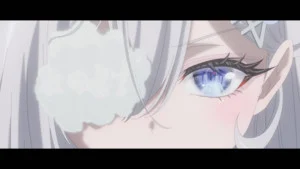
How do you conclude a series like SHIBOYUGI: Playing Death Games to Put Food on the Table? Episode 11 doesn't look for an easy, tidy resolution. Instead it doubles down on the series' commitment to mood, memory, and moral ambiguity—delivering a finale that feels more like an elegy than a victory lap. If you've followed Yuki's battered trail through the show's fractured timeline, this episode asks you to sit with the bruise rather than slap on a bandage.
Episode 11 — Recap and structure
The finale pivots around the looming confrontation with Kyara and the emotional fallout of Hakushi's apparent death. But SHIBOYUGI has never been primarily interested in linear storytelling. Instead of a straight boss fight, the episode intercuts present action with ghostly, cyclical flashbacks and death-dream sequences that collapse Yuki's past and present into one aching montage. The big reveal—that Hakushi may have faked her death—reframes earlier events without offering a straightforward answer. The result is less about plot closure and more about how memory and trauma inform a brutal, repeatable ritual.
Thematic focus: memory, survival, and repetition
At its core, Episode 11 interrogates what it means to survive in a world whose rules are arbitrary and savage. Yuki's proclamation—dropping the subtitle and declaring she'll keep "playing death games to put food on the table"—reads both as defiance and resignation. The show asks whether meaning can be forged out of survival itself, even when the foundations of that meaning are built on lies, grief, and murder.
Ghosts of what might have been
One of the episode’s most affecting choices is how it assembles the faces of girls Yuki has killed—Kinko, Aoi, Azuma, Riko, Mishiro, Moegi—into a single tableau of remembered lives. These sequences feel like miniature funerals: not just for the dead, but for all the stolen futures and relationships that never had space to exist. The imagery is haunting—paper angels, cotton, tattered fabric—symbols of preservation that never quite bring the dead back but grant them a last, human dignity.
Yuki's character arc: victory or deeper tragedy?
Yuki's arc resists easy categorization. On the one hand, she takes on Hakushi's dream and finds a focus: to keep playing and keep surviving. On the other, the episode constantly undercuts that apparent strength with reminders of her fragmentation—the fog between games, the dreamlike immobility in the Golden Baths, the brief, squandered rebellions. The show leaves us with two Yukis: the physically triumphant fighter who declares purpose, and the haunted survivor whose small attempts at change are fleeting. Which version is “real”? SHIBOYUGI refuses to pick, and that refusal becomes the point.
Kyara as foil and final opponent
Kyara is presented less as a fully fleshed alternate and more as a thematic foil—psychopathy in human form, a mirror that shows Yuki what she could become if all tenderness is stripped away. The climactic confrontation isn't just combat choreography; it's a negotiation of identity. Turning Kyara into another preserved angel at the end is telling: the show doesn't simply villainize her, it folds her into the same melancholic memorializing it applies to every other lost girl. Even the antagonist gets a moment of quiet grace.
Style as substance: non-linear storytelling and sensory design
Critics might call SHIBOYUGI style over substance, but this episode makes a persuasive case that style here is the substance. The non-linear edits, the recurring motifs of playgrounds and paper figures, the way scenes blur into memory—all of these are deliberate narrative choices that convey emotional truth more powerfully than exposition could. The audio and visual design work in tandem to create that fevered, hallucinatory atmosphere: muffled soundscapes in the foggy after-games, sharp percussion and silence in moments of violence, and a visual palette that alternates between muted grays and stark, painful color splashes during moments of remembrance.
Animation and direction highlights
The episode stages set pieces with a painterly confidence, using space and perspective to communicate dissociation. Close-ups on tiny objects—a paper angel's frayed edge, a drop of water on a bath tile—become emotional anchors. Direction emphasizes the human scale of tragedies: a child's toy, not an epic battlefield, becomes the locus of loss.
Ambiguity as emotional strategy
Many viewers will feel unsettled by the lack of definitive answers. Did Hakushi really fake her death? Is Yuki’s resolve genuine or a defensive posture against a world that will inevitably chew her up? The episode intentionally withholds tidy resolutions because its real goal is to leave the viewer inside the feeling of ambiguity—of mourning without closure, and survival without redemption. In that sense, the finale performs exactly the role the series has trained us to expect: it leaves a bruise, not a bandage.
Where to watch
SHIBOYUGI: Playing Death Games to Put Food on the Table is currently streaming on Crunchyroll.
For more thoughts from writers covering contemporary anime, you can also check out KickTheBeckett's blog for related commentary and podcasts.
Final thoughts
Episode 11 of SHIBOYUGI may frustrate viewers who crave neat wrap-ups, but it succeeds spectacularly as an emotional and thematic capstone. The episode doesn't tie up every thread because its ambition is different: to hold the viewer in the same uneasy space Yuki occupies, where grief, survival, and strange tenderness overlap. If you value anime that trusts mood and metaphor over exposition, this finale is deeply satisfying. It leaves open the future of its protagonist in a way that feels honest to the series—wounded, resolute, and unwilling to pretend that endurance equals absolution. In the end, SHIBOYUGI reminds us that sometimes all that's left is to keep playing the game, because someone has to put food on the table.
https://www.myanimeforlife.com/shiboyugi-episode-11-review-death-games-for-survival/?feed_id=188314&_unique_id=69be8e609ef5d


Comments
Post a Comment