Sword of the Demon Hunter Manga Update
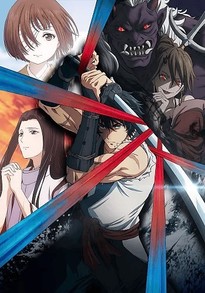
Sword of the Demon Hunter arrives as a period supernatural drama that oscillates between cinematic highs and oddly underwhelming monster battles. Set principally in 1850s Edo, it follows the apparently ageless swordsman Jinya as he confronts grotesque yokai while carrying a personal vendetta rooted in love and loss. The series' strongest moments are intimate, beautifully composed, and steeped in atmosphere—yet they sit alongside action sequences that often miss the mark. Below I break down what works, what doesn't, and why this anime is more of a mood piece than a monster-of-the-week spectacle.
Promotional key art for Sword of the Demon Hunter.
Overview: A Two‑Cour Story with Split Identity
The show is structured as a two‑cour series and opens with a 50‑minute premier that immediately sets a higher bar than subsequent episodes. That opening acts almost as a short film: lush, atmospheric, and heavy with tragic romance and ritualized violence. Afterward the series largely settles back into a quieter slice‑of‑life rhythm in Edo, punctuated by paid demon hunts and interpersonal vignettes. This tonal split—sweeping cinematic drama vs. small‑scale domesticity—defines much of the series’ appeal and its frustrations.
Episode One: Cinematic Peak
Episode one is the show’s undeniable highlight. It embraces naturalistic compositions and emotional restraint, building to scenes of such visual and emotional clarity that they outclass much of what follows. A scene of two lovers beside a river, framed by falling blossoms, conveys grief and restraint with the kind of subtlety anime often aims for but rarely achieves. The sequence that culminates in a vividly staged murder is both horrific and oddly beautiful—an unsettling blend that lingers.
Characters and Relationships
At the center is Jinya (initially named Jinta), a taciturn demon slayer whose human façade hides a demonic longevity. His motivations are driven by memories of two women—sisters in effect—whose tragic fates continue to haunt him. In Edo he forms gentle ties with a ramen shop owner and his perceptive daughter Ofu, a tsundere‑leaning aristocratic girl, and a worldly wise courtesan. These supporting characters bring warmth and grounded humanity to the narrative, and many of the show’s best scenes are quieter conversations rather than battles.
Ofu and the Everyday
Ofu’s perceptiveness and small acts of kindness provide a valuable counterpoint to Jinya’s inwardness. The show works best when it allows these relationships to breathe: ordinary life, community interactions, and the texture of Edo society are where the series feels most alive.
Action vs. Slice‑of‑Life: A Tension Unresolved
The series sells itself on demon slaying and supernatural stakes, yet the fight choreography and monster design frequently disappoint. Several set‑piece battles (notably an episode four encounter) land as unintentionally comical, with awkward sense of scale and clumsy animation that undermines tension. Later arcs continue this pattern: occasional genuinely affecting ghoul encounters sit beside uninspired, toy‑like confrontations that would fit better in campy tokusatsu than a moody period piece.
When you reframe the anime as a period slice‑of‑life with supernatural seasoning, many episodes become far more enjoyable. The talky, interpersonal scenes have an intimacy reminiscent of historical character dramas and often reveal subtle emotional payoffs. For viewers willing to accept the weaker action, the show rewards patience with intriguing character beats and occasional narrative surprises.
Visuals and Direction
Visually the anime is inconsistent. The opening episode shows what the production can achieve—thoughtful composition, expressive color palettes, and memorable staging. In contrast, much of the Edo‑set material lacks that same flourish, relying on modest background work and simpler direction. That said, the period detail in costume and setting helps sell the atmosphere, and some non‑action sequences are beautifully observed.
Themes and Historical Backdrop
The premise of an immortal or slow‑aging protagonist living through pivotal historical change is fertile ground. The series teases bigger possibilities—Japan’s encounter with Western powers, the arrival of the Black Ships, and the social shifts that will transform Edo into modern Tokyo. A more ambitious approach might have used temporal jumps to show society evolving around Jinya (similar in spirit to stories that track an immortal through decades), but the current episodes use history more as window dressing than as a driving force.
Some episodes experiment with form—one is framed as a stage play; another explores a mysterious painting and hints at deeper backstory—but not all experiments stick the landing. Nevertheless, when the show taps into classical Japanese motifs (for instance, variations on the Urashima Tarō tale), it produces one of the series’ most interesting and unexpected outcomes.
Who Should Watch?
If you want slick, consistent monster battles and pulse‑pounding action, this series will likely frustrate. If you appreciate mood, period atmosphere, and character‑driven scenes—and you can forgive a number of campy or poorly animated fight moments—Sword of the Demon Hunter offers worthwhile rewards. Viewers who enjoy historical slices of life with a supernatural slant will find more to appreciate than those expecting a straight demon‑slayer romp.
Final thoughts
Sword of the Demon Hunter is a show of pleasing contrasts: a gorgeous, emotionally charged opening followed by a quieter, uneven middle that trades spectacle for intimacy. Its best moments are delicate and cinematic, anchored by a haunted protagonist and a warm roster of supporting figures. Its weakest moments are the action sequences, which often lack the technical polish needed to convince. Taken as a period slice‑of‑life that occasionally veers into the supernatural, it’s an agreeable watch—one that might have been far more ambitious but still contains enough memorable scenes to justify a look.
Note: the series references historical events and cultural tales—like the Black Ships—used more as context than as central plot mechanics. For background reading on these historical elements, see this overview of the Black Ships.
https://www.myanimeforlife.com/sword-of-the-demon-hunter-manga-update/?feed_id=171814&_unique_id=69999f9bb9fff


Comments
Post a Comment