Champignon Witch Episode 8 Review
Episode 8 of Champignon Witch leans heavily into fairy-tale language and classical motifs, transforming what could be a straightforward magical-drama beat into a rich meditation on love, identity, and the complementary nature of opposing powers. This installment reframes Lize as a kind of Sleeping Beauty/prince figure, shows how loving bonds awaken dormant power, and deepens the worldbuilding around black and white magic. Below I break down the episode's themes, character beats, and what it suggests for the series going forward.
Episode recap: key moments and turning points
Episode 8 reveals how Lize's magic is activated: not by training alone, but through the emotional bond he shares with Luna. Claude's explicit warning—that failure to master magic could be fatal—sets the stakes, while the episode slowly unfolds a more hopeful truth. Lize's magic had been dormant, like a sleeping monarch waiting for the right catalyst. Spirits bestow gifts, reminiscent of fairy-tale benefactors, and the Mushroom Lord, briefly, functions as a perceptive observer who senses the balance between the two protagonists. Meanwhile, small moments with supporting characters (the pig prince cameo and the apothecary's backstory) tease material from the manga that hasn't yet been fully animated.
Fairy-tale motifs: Sleeping Beauty, Snow White, and more
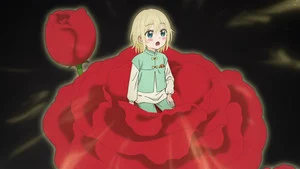
The episode frames Lize within the tradition of classic fairy tales. Visual cues—Lize laid out on a table, evocative of Snow White imagery—pair with narrative beats that recall ATU410 (Sleeping Beauty). The spirits' gifts parallel the bestowing fairies of those tales, and Claude's remark that Lize is a prince further cements the gender-swapped fairy-tale reading. This isn't just playful homage: it actively reshapes audience expectations. Where fairy tales usually rely on trope-driven resolutions (true love's kiss, long slumbers), Champignon Witch refracts those expectations through a modern lens—love is not a simplistic cure-all, but it is the key to awakening Lize's white magic.
Why the Sleeping Beauty comparison matters
Classifying Lize as a Sleeping Beauty figure matters because it changes how we interpret his agency and vulnerability. His "sleep" is not necessarily physical; it's magical and emotional. The episode suggests that his power has been held back by an incomplete self-understanding. The awakening is less about an external rescuer and more about internal realization catalyzed by intimate connection with Luna.
Love as magic: Lize and Luna's relationship
One of the episode's most powerful claims is that love is not a handicap for witches but a form of power. Claude's confident assertion that "black magicians can't do love" is undercut by the narrative itself. Luna's capacity to love—shown previously via the Henri subplot and here reinforced—proves crucial. The show posits that Luna's nurturing impulses (feeding Lize, protecting him) and Lize's emotional devotion are the complementary halves of a single magical ecology. Where Luna fears that love weakens her, the episode demonstrates that love can unlock a different, necessary kind of strength.
Black vs. white magic: complementary halves of a whole
Champignon Witch expands its magic system beyond simple binary oppositions. Black magicians are shown as purifiers, filtering toxicity so daily life can continue; white magicians nurture the unspoiled, allowing growth and flourishing. This distinction reframes the social stigma around witches: those labeled "black" are not inherently malevolent, and "white" practitioners are not purely benevolent in isolation. The key argument of Episode 8 is that both are needed. Luna and Lize serve as emblematic representatives of this balance—their abilities interlock rather than cancel one another out.
Implications for worldbuilding
By making magic’s divisions mutually dependent, the series raises stakes beyond individual conflicts. Social prejudice against certain types of magic becomes not just an ethical failing but a systemic vulnerability. If people forget that both halves are necessary, the society built on these practices could unravel. Episode 8 uses the characters' bond to underline this fragile equilibrium.
Character focus: Claude, the Mushroom Lord, and supporting players
Claude remains an antagonistic force, both blunt and ideologically rigid. His dismissive tone toward love and emotional bonds marks him as a foil to Luna's more compassionate approach. The Mushroom Lord is intriguing precisely because he sees the balance more clearly—he recognizes that Luna and Lize together form what one might call a whole. Supporting cameos, like the pig prince and the apothecary, hint at richer manga material to be adapted. The episode highlights a minor frustration for readers of the source material: not all side stories have yet been animated, but there appears to be room for those threads to surface later.
Visual symbolism and narrative tone
The show's visual language in Episode 8 leans into familiar fairy-tale palettes and staging: the slumbering figure, the ritualized gift-giving by spirits, and the contrast between somber, restrictive interiors and warm, nourishing domestic scenes. The narration occasionally adopts a fatalistic tone—suggesting doom and separation—but the episode ultimately offers motifs of revival and renewal. This oscillation between despair and hope is classic fairy-tale structure and effective here: the audience is made to feel the weight of possible loss while also being reassured that a narrative pause often precedes recovery.
Where to watch
Champignon Witch is currently streaming on Crunchyroll. For viewers looking to catch up, check the official Crunchyroll page (link provided as a nofollow reference): Crunchyroll — Champignon Witch.
Post-script: manga cameos and unanswered questions
The brief appearance of the pig prince and the apothecary's hint-laden scene both originate in short manga stories (the pig prince likely from volume three; the apothecary from volume one). Fans of the manga may find it vexing that some side arcs haven't yet been animated in full, but Episode 8 suggests the production team is selective rather than dismissive—leaving room for future adaptations of those vignettes.
Final thoughts
Episode 8 of Champignon Witch is one of the series' more deliberate installments: it deepens the central relationship, expands the magic system's moral logic, and leans into fairy-tale archetypes without becoming derivative. The Sleeping Beauty and Snow White echoes are used not as mere ornamentation but as lenses through which to read Lize's awakening and Luna's quiet power. By insisting that black and white magic are interdependent, the episode reframes social prejudice as a structural problem rather than a personal failing, setting up richer conflicts ahead. If the series continues to balance intimate character work with these larger thematic stakes, the payoff could be moving and resonant.
https://www.myanimeforlife.com/champignon-witch-episode-8-review/?feed_id=173188&_unique_id=699c2e52aedbb


Comments
Post a Comment