Ramparts of Ice — Episodes 9–10 Review
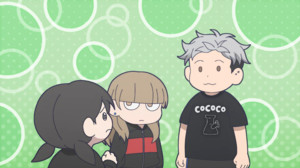
I realized something while watching episodes 9–10 of The Ramparts of Ice: the central love polygon—adorable as it is—has quietly taken a backseat to the show’s slow-burn excavation of Koyuki’s past. The present-day antics (amusement-park dates, flushed crushes, and mascot beefs) are fun and well-written, but the episodes really sing when they peel back the layers of what happened to Koyuki in middle school. Even as a lot of mysteries have been answered, a single line—Koyuki telling Igarashi “I never really liked you”—still sits like a loaded question at the center of everything.
Unpacking Koyuki’s Middle School Trauma
Episodes 9–10 do the delicate work of tying together why the present cast behaves the way they do: why Miki carries guilt, why Koyuki briefly dated Igarashi, and why she became the target of school bullying. The show has been careful not to reduce trauma to a tidy explanation, but these episodes provide connective tissue that makes the characters’ emotional responses feel earned.
The most striking moment is Koyuki’s cold dismissal of Igarashi during their breakup. On the surface, “I never really liked you” reads as an abrupt rejection—but context softens it into something more complex. If Igarashi, intentionally or not, made Koyuki feel embarrassed or ashamed of her interests, his obsession could have become the very thing that forced her to shut down. The line functions as both a defensive lie and a lingering indictment, and the series leaves room for re-evaluation rather than offering a single black-or-white verdict.
Present-Day: Amusement Park and Teen Hangouts
The amusement-park day is a breath of fresh air: lighthearted, character-driven, and genuinely funny. Asagawa’s script excels at depicting how teens decompress—ridiculously over-the-top mascot antagonism, spontaneous merch purchases, and clumsy flirting. These scenes give the cast room to breathe and remind viewers why the show’s slice-of-life moments are just as important as its heavier beats.
Character dynamics get some tidy development here. Yota and Miki’s easy rapport continues to be charming, while Minato’s crush on Koyuki becomes more pronounced. The embarrassment, the small jealousies, and the quiet, competitive looks are all rendered with a soft touch, letting the audience feel the stakes without melodrama.
New Term, New Faces: Yuki and Tsukiko’s Roles
One of the simpler but satisfying reveals is the identity of the silver-undercut boy from the opening: Yuki, Miki’s younger brother. He’s playful and a little rowdy, and his casual familiarity with Koyuki adds an awkward, adorable friction for Minato. Yuki’s presence nudges the story toward more naturalistic, lived-in interactions, and his design and mannerisms provide a pleasant tonal contrast to the main quartet.
Tsukiko as an Outside Lens
Tsukiko’s inclusion in the class is a smart narrative maneuver. Until now she has functioned mostly offstage—an interlocutor who helps illuminate Koyuki’s social world. Now, as part of the main group, Tsukiko becomes a valuable viewpoint character. Her backstory (she quietly quit a large social group because of its unspoken rules) positions her as someone who recognizes dynamics the core four miss—most notably, Minato’s obvious but unconfessed feelings for Koyuki.
Akine Atagawa: A Potential Wildcard
The arrival of Akine Atagawa—an acquaintance of Minato and sister to one of Koyuki’s middle-school tormentors—introduces interesting narrative possibilities. On paper, the setup might read as a predictable return of old antagonism. In practice, the series has repeatedly avoided simplistic confrontations, and Akine’s want to befriend the group hints at subtler uses: atonement, complicated loyalties, or the messy, slow dissolution of past rivalries.
Thematic Threads: Memory, Guilt, and Adolescent Performance
What makes these episodes resonate is how they thematically weave memory and performance. People perform versions of themselves to fit in, and the show demonstrates how those performances can harden into self-protective lies. Miki’s guilt, Koyuki’s silence, and Minato’s blushing competitiveness are all manifestations of how teens act under pressure—sometimes cruelly, often clumsily, but always with a tender, human edge.
Asagawa’s writing remains the backbone of the series. The dialogue feels lived-in, the pacing balances quiet revelation with lighter beats, and the show’s emotional intelligence prevents it from resorting to melodrama. Direction and voice work back the script effectively: small visual flourishes and understated line deliveries make ordinary moments feel charged.
Where This Sets Up the Finale
Even though many narrative strands have been tied off, the “I never really liked you” moment ensures the finale still has teeth. Is it a defensive fabrication, a manifestation of confused adolescent language, or a blunt truth? The series has been deft at offering complicating details rather than tidy answers, so the final episodes are likely to continue that pattern—revealing, reframing, and humanizing the characters rather than handing down definitive moral judgments.
Stylistically, the show is poised to end on the same note it’s maintained throughout: a tender, perceptive look at adolescence that prioritizes emotional clarity over cathartic confrontation. That approach makes the show more rewarding for viewers who prefer character studies to shock-value plot twists.
Where to Watch
The Ramparts of Ice is available to stream on Netflix. For those who want to revisit earlier episodes or catch up before the finale, check the series on Netflix (link opens in a new tab).
Watch The Ramparts of Ice on Netflix
Final thoughts: Episodes 9–10 of The Ramparts of Ice are a reminder that a show’s emotional core can be quieter and more complicated than its plot hooks. The amusement-park interludes and fledgling romances are delightful, but the series’ real strength is its careful excavation of Koyuki’s past and the ways that memory shapes present behavior. With a potentially explosive line still hanging in the air, the final stretch feels promising: not for a tidy reveal, but for the chance to see these characters reckon with who they were and who they want to be.
https://www.myanimeforlife.com/ramparts-of-ice-episodes-9-10-review/?feed_id=225903&_unique_id=6a287bcb5c383


Comments
Post a Comment